
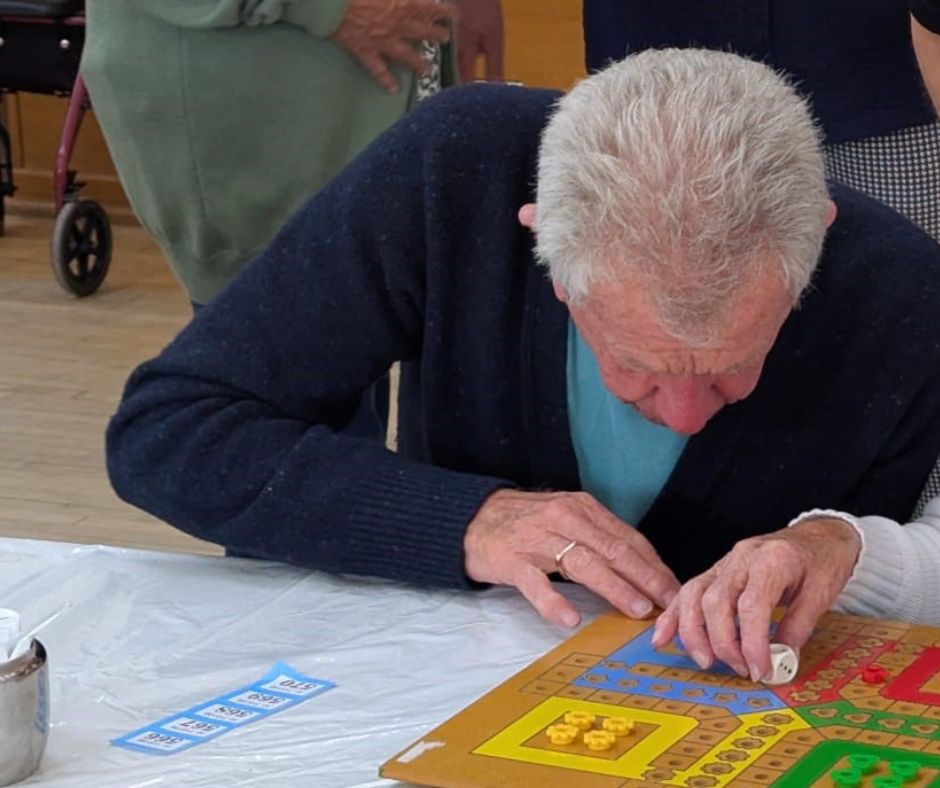
“When I’m at a table with five or six others, we swap stories. Everyone’s journey is different, some lost their sight suddenly, others gradually. You learn about tech, apps, magnifiers… It’s amazing how much you pick up just by talking.”
Graham is an 85-year-old with dry wit, a love of conversation, and an infectious passion for gardening. A lifelong sports enthusiast, he especially loved playing golf, a hobby he continued well into his 80s. Three years ago, Graham and his wife moved into a brand-new house in West Berkshire, to be closer to family. The garden was nothing more than a bare triangle of clay-heavy earth. But over time, Graham and his wife transformed it into a flourishing green haven, a source of daily joy, peace, and pride.
Designed by his wife and brought to life through hours of careful planning, planting, and hands-on effort, the garden has become more than just a project; it’s a symbol of teamwork, resilience, and optimism.
“I could welcome anyone to come and have a look at my garden – and I know they’d be immensely impressed,” Graham says. “Nobody believes we managed to do it in just three years – not bad for an 85-year-old and a 77-year-old!”
Where Graham started from
But behind the pride in his garden lies a long, complex story of adapting to progressive sight loss. Graham was diagnosed with poor vision at a young age and by the age of 5, he was already wearing glasses. The eventual diagnosis was a rare genetic macular condition that caused his retinal cells to die without being replaced. Over time, his vision gradually worsened, as more and more blind spots appeared in his field of vision.
“It’s like Russian roulette,” he explains. “You never know where the next bit of damage will happen. And once it’s gone, it’s gone.”
In his fifties, Graham was referred to Moorfields Eye Hospital and was seen by some of the UK’s leading macular specialists. He adapted and adjusted over the years, refusing to let his condition stop him from doing what he loved. Even when his left eye became essentially unusable, he continued playing golf with the encouragement of friends who wouldn’t let him quit. He jokes that he never lost a ball because there were always three people looking for it on his behalf.
But two years ago, everything changed. A sudden deterioration in Graham’s better eye meant he lost central vision entirely. He could still move around and recognise shapes, but the detail was gone; he couldn’t read, text, or recognise faces. The visual world he had always been able to adapt to became suddenly inaccessible.
“People ask what I can see now. I tell them — I can see everything, but nothing clearly. That’s the only way I can describe it.”
Though he remained upbeat, the loss of visual clarity began to chip away at his independence, his confidence, and his connection to others.
How Berkshire Vision helped
When Graham was registered as severely sight-impaired, it marked a key turning point. Through his local council’s sensory support team, he was referred to Berkshire Vision. Almost immediately, he felt a difference. The support and guidance he received from Berkshire Vision were instrumental in his journey, underscoring the crucial role such organisations play in the lives of those with sight loss.
“One of the best things that happened was that a real person came to my home, sat down, and explained what help was out there. They didn’t just talk at me – they listened. That really mattered.”
He joined as a member and was quickly connected to a wide range of support, from social activities and equipment advice to one-to-one technology help. Most important of all, it gave him back a sense of autonomy. The specific support he received included regular social activities, training on how to use voice-to-text software, and advice on adapting phone settings for better accessibility.
Graham’s biggest frustration was that, while he could use a magnifier to read messages, he couldn’t reply to them. With training from Berkshire Vision’s Tech Buddies at drop-in sessions, and during tailored one-to-one support he learned to use voice-to-text software, adapt phone settings, and even edit messages.
“I can now read and respond to messages on my own,” he says. “I’m still getting the hang of editing the odd Yorkshire-accent mishap, but if there’s a mistake, the recipient can just get the gist!”
A calendar full of connections
Graham has since embraced many of Berkshire Vision’s activities in West Berkshire. His schedule is now peppered with tea afternoons, craft sessions, and more unexpected adventures, like Tai Chi workshops, ten-pin bowling, archery, and even alpaca petting.
“Some of it sounds mad, but it’s brilliant,” he laughs. “When I put my name down, I know they’ll get me there and make sure I’m looked after.”
He especially values social meetups. Sitting with others who have experienced sight loss in different ways has been both comforting and enlightening. The sense of community he found at Berkshire Vision has been a powerful force in his life, highlighting the importance of connection in overcoming challenges.
“When I’m at a table with five or six others, we swap stories. Everyone’s journey is different — some lost their sight suddenly, others gradually. You learn about tech, apps, magnifiers… It’s amazing how much you pick up just by talking.”
The difference it made
Today, Graham feels more empowered, more informed, and more connected than he has in years. Thanks to Berkshire Vision, he’s:
- Regained the ability to communicate independently with friends and family.
- Learned to use accessible tools that help him live with confidence and dignity.
- Found new community and friendships through regular group activities.
- Swapped stories and solutions with others, gaining emotional and practical support.
- Rediscovered joy in learning, walking, and socialising — even trying things like Tai Chi at 85.
Most importantly, he no longer feels left behind.
“It’s not just about the equipment. It’s the people. It’s the time they take to understand you and find what works for you. Berkshire Vision hasn’t just helped me adapt – they’ve helped me thrive.”