
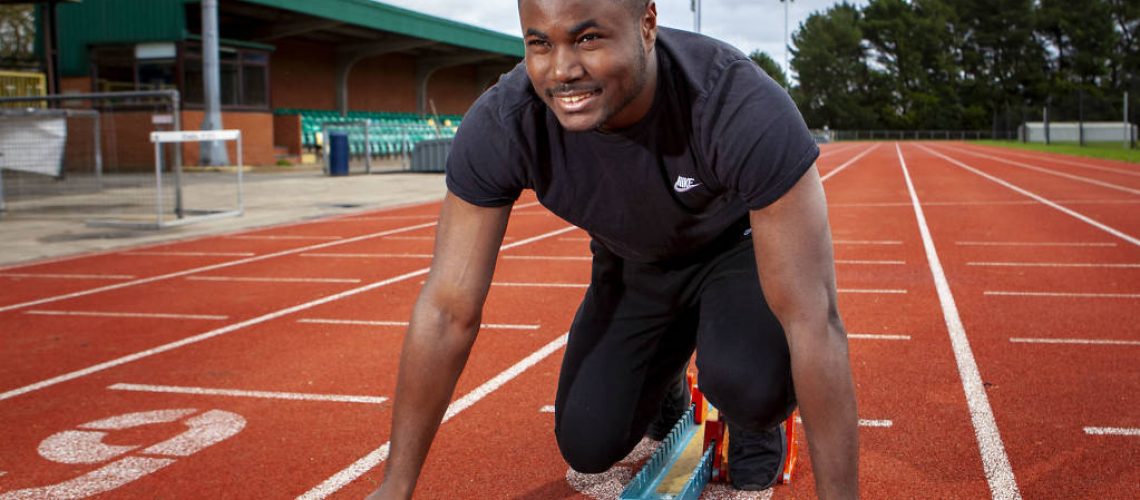
A couple of weeks ago, we welcomed Souleyman Bah to present a workshop about his employment journey and the lessons he has learnt along the way. Following that I got in touch with him to talk about a few points he raised that were particularly poignant and I wanted to publish as part of our blog series. Soul wants to inspire the VI community through his work and the below is a really nice insight into his experience and some of the lessons he’s learned along the way.
Through your work, how do you hope to inspire the VI community?
Through sport or my entrepreneurialism I hope to inspire the VI community by proving you can achieve success in life and live the life you deserve despite the label society puts on you, there are so many labels and limitations put on us by society but I want to be a proven statement that it is possible to achieve what you want to achieve.
How important is your inner voice?
Very important because it’s the belief I have about myself, the great thing is it can change and adapt but it’s an individual’s responsibility to take that inner voice and cultivate it into positivity by changing I can’t into I can and be that person who can provide a service or skill to the world. Your inner voice changes your mindset to what you can and can’t do so it’s very important, I think my early Paralympic training helped me to develop a positive inner voice which I have carried through with me.
How do you motivate yourself?
My motivation comes from clarity in a goal and knowing the steps to work towards that goal. Sometimes when you don’t know where your heading or what you need to do, your motivation can become scattered, having clear objectives to get where I want to be allows me to have intrinsic motivation to get there. There is too much working against us already that can damage our motivation from grades at school to work experience, but having a clear goal allows me to trust in the process.
What are a couple of the best lessons you’ve learned in your employment journey?
Number one is it’s sort of like a numbers game and you have to keep trying until you strike gold, you have to keep trying until you get the outcome you want.
Number two, everything you experience is valuable, even all the no’s are all valuable for the next thing you do. If you’ve had no’s in the past but are persistent that’s part of your work ethic to keep going.
Good communication skills are also very important and that’s not just in relation to disability, you need to know what your strengths are and what you can bring to a workplace or other place.
Main messages to people who are thinking of looking for work?
1- Look for help and assistance, sometimes we think we’re all alone or its only in your hands, there are schemes, tech and organisations that can give you extra leverage, look for services or people that can help push you and assist you and take some stress away
2- Start developing your skills in any way possible, volunteering in the sector, take up training etc.
3- Looking at success stories, maybe find a mentor, speak with them and draw off their success
What have been your biggest hurdles and how did you overcome them?
Biggest one is dealing with day to day VI and it’s issues, there’s no denying that you have a VI and every morning you wake up it’s there. For example I will see less and less as I have a deteriorating eye condition and I can’t do the same things as others can such as reading the news or scrolling the internet, but I have to come to terms with it in order to move forward.
From a career perspective, looking at what you’re good at or what you want to do but then comparing what other people are doing or achieving and feeling like I can’t do that. There are people doing office jobs or sight heavy jobs that I felt like I should be doing but I couldn’t that was a big hurdle to comprehend, but switching to what am I good at and what can I build as a career has helped me get over that hurdle.
Lastly developing the confidence to communicate more, you can become introverted if you feel the world is overwhelming, building the confidence to speak out more and telling the world what you want and allowing people to come to you and telling them what you want to do, asking for help is important to overcome any hurdle you feel you’re facing.
A lot of people I speak to say they’re treated differently since diagnosis or by employers, have you had that experience in work and if so how have you dealt with that. If not why do you think that is?
Yes I have experienced it but for me it was more positive. When you don’t have a diagnosis there are questions and doubt, e.g. what’s wrong with me, do people look at me differently or think I’m odd? Diagnosis should be a moment of empowerment, a sigh of relief, I know what this is now and there is information I can get and I can move forward with the diagnosis and how I can adapt my life, coming out of the dark and having answers.
Being empowered and communicating to employers, what you need and how you can work round it is really important.
Some of our members are very reluctant to put themselves out there and get back into the working world, do you have any advice for those who are nervous or worried about their own capability?
I think definitely take your time and take it at your own pace, don’t feel rushed by external forces, process information one step at a time, you can get overwhelmed trying to keep up with the pace of the world, take time to find ways of coping, make sure you’re in a clear headspace.
Also try and find things you enjoy, no point doing a job that is difficult or emotionally and mentally challenging which is a recipe for a disaster, explore things you genuinely enjoy doing, half the battle is adapting to suit your needs. Research online, talk to people , find educational or support schemes or internships, break it down into chunks of how you want to move forward and take small steps at a time.
Image taken from (TimeOut, 2020

